

Is the Blackstar Sonnet 120 Big Enough for the Stage?
Acoustic Amp Quick PicksA 120-watt, 1x8" acoustic combo with dual tweeters, two channels, +48V phantom power and a variable highpass filter that keeps sub-sonic mud out of your headroom.
Quick Take
What it is: A 120-watt, 1x8" acoustic combo amp with dual tweeters, two channels with independent EQs and anti-feedback, +48V phantom power, dual effects loops, three XLR DI outputs, USB recording and Bluetooth audio.
Who it's for: Acoustic performers and singer-songwriters who want everything a pro player needs on stage from a conveniently compact amp.
Price: $599.99 at Sweetwater (verified 08/19/2026)
The catch: It's built for stage-ready volume. If you want more of a practice or rehearsal amp, the 60-watt Sonnet 60 is the one to look at instead.
Yes — 120 watts through an 8-inch speaker and dual tweeters covers a stage, and the Blackstar Sonnet 120 sounds much bigger than its specs would suggest. It's for acoustic performers who want the integrity of their acoustic tone kept intact, just louder.
Many players assume that a compact acoustic amp will sound unnatural or congested compared to larger amps, and the Sonnet 120 aims to prove differently. We took a look and a listen to this 1 x 8" acoustic combo, and were surprised to learn what such a compact and portable amp could offer modern acoustic performers. The reason is the variable highpass filter. It clears sub-sonic mud out of your signal before it can eat headroom, so the wattage, the ported cabinet and the EQ all go to your fundamental notes instead of the flub.

Blackstar Sonnet 120 Fast Facts
Blackstar worked closely with guitar virtuoso Jon Gomm to develop the Sonnet 120 acoustic amplifier — more on that below. It's designed as a compact performance amplifier, conveniently sized while giving you everything a pro player needs on stage. Dual channels with independent EQs are ready for your acoustic instruments and your microphones alike, with true +48V phantom power for condenser mics.
- 1 x 8 acoustic combo amp with dual tweeters
- 120 watts of output power
- 2-channel design with independent EQs
- Anti-feedback and phase controls on each channel
- 2 x Instrument/Microphone inputs with +48V phantom power and pad options on both channels
- 4 studio-quality reverbs: Hall, Plate, Studio and Chamber
- Independent effects loops for each channel
- 3 x XLR DI outputs
- USB connectivity for recording to smartphone or laptop
- Bluetooth audio input for streaming music during set breaks
- Footswitch socket for audio mute and reverb on/off
- Tilt-back stand that also converts to a pole mount
- Conveniently compact at 14"x16.5"x11.5" and 25.3 lbs.
Jump to: the tuned port [2:01] · dialling the highpass filter [5:06] · what Brilliance does [6:23] · the two reverbs compared [7:08] · the kickback foot and pole mount [9:11]
How the highpass filter creates focused, punchy tone
The Sonnet 120's built-in variable highpass filter is the key to unlocking its full potential with your acoustic guitar. Blackstar worked with Jon Gomm to optimize the amp's sonic potential — and his dynamic, percussive play style requires plenty of low-end power. Thumping on the guitar body and plucking low-tuned strings would quickly take up much of your amp's headroom, and would sound a bit muddy too — unless you have a highpass filter in your signal chain, which is what makes the Sonnet 120 stand out.
The filter removes excessive bass and unwanted low frequencies before they have a chance to take up valuable headroom, which gives you clearer, stronger fundamental notes and greater overall definition. Rotate the highpass control as you play your lowest notes, whether that's on the strings or as body percussion. Listen for the point where you begin to lose too much bass for your taste, then back it up just a bit. You'll have the full punch and power of your lowest fundamental notes, without any extra flub or mud.
Musical tone shaping for acoustics and vocals
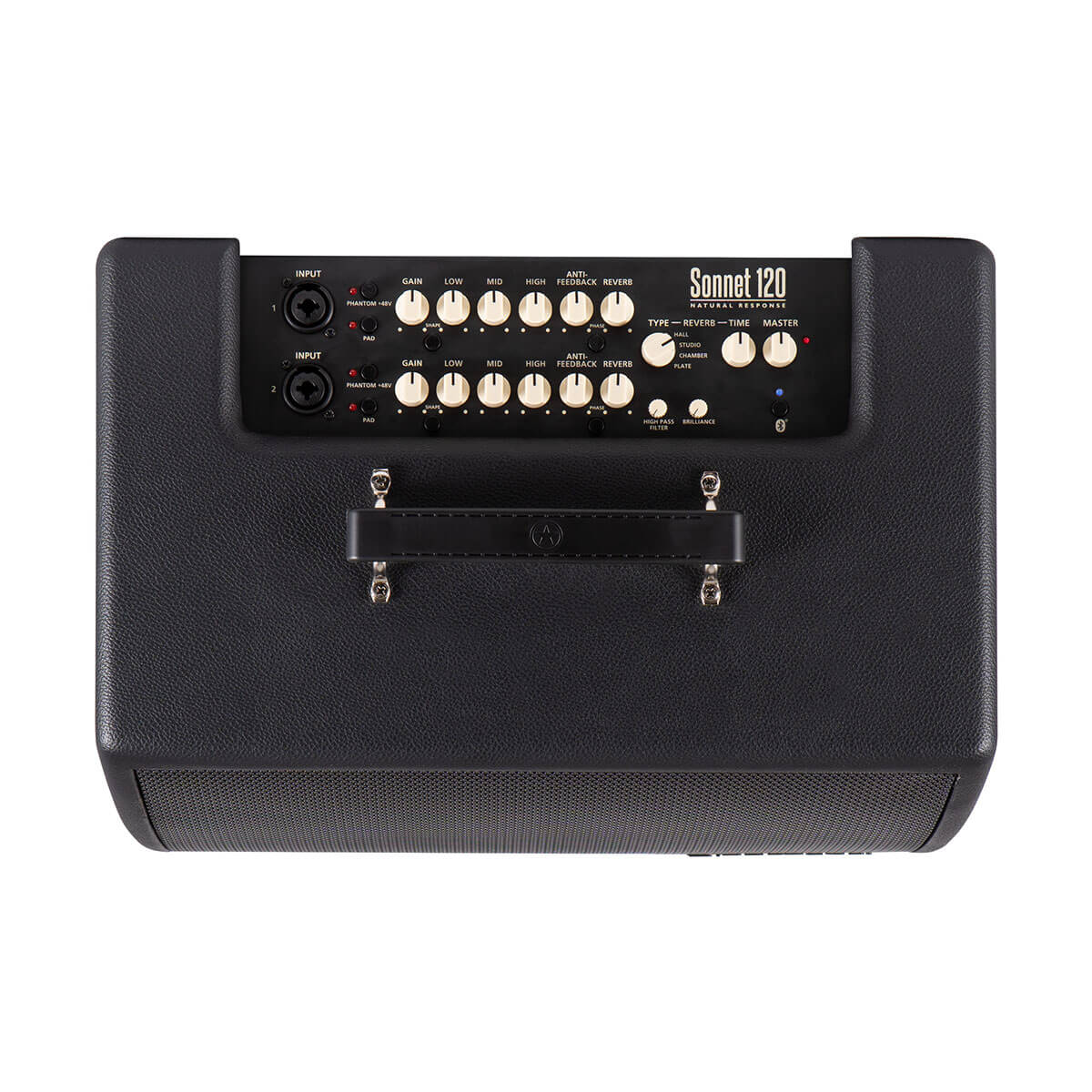
The Sonnet 120 is a true two-channel design, and on each channel you get your own EQ, anti-feedback and effects send level. Most acoustic amps of this type offer a 3-band EQ, but it takes on a new level of musicality once you take the integrated highpass filter into account.
Because you can use the highpass filter to remove unwanted bass, and the anti-feedback to eliminate problem frequencies before they howl, you're free to use the 3-band EQ to sweeten your ideal sound instead of using EQ to solve problems. When you boost the bass, you're only turning up the fundamental frequencies — not unwanted sub-sonic rumble. Use the high frequency control to suit the sound of your pickup, then engage Brilliance for an extra layer of polish. With the highpass filter cutting out the mud, the Sonnet 120's EQ is extremely musical.
Where the low end comes from in a 1x8 combo
The Sonnet 120 sounds like a larger amp than it is, and you should definitely check it out if you're the type of player that's convinced you need a 10-inch or 12-inch speaker for the fuller sound. Its closed-back cabinet is ported for deeper bass response, and smart cabinet design goes a long way toward the overall sound of any amp. In all, the 8-inch speaker and dual tweeters do a great job of keeping the weight down while delivering natural full-range sound.
One more feature that helps the Sonnet 120 deliver fuller bass is the built-in kickback stand. On the bottom of the amp you'll find a small column you can unscrew to act as a kickback stand, de-coupling the amp from the floor or stage for fuller, more defined bass. You can also completely unscrew that piece and mount the Sonnet 120 on a pole mount, for better audience coverage as well as monitoring.
Effects loops for acoustic pedals and vocal processors

The Sonnet 120's dual-channel design makes it ideal for singer-songwriters and players that swap guitars throughout the performance, and dedicated effects loops for each channel further expand the versatility. The effects loops are ideal for time-based acoustic effects pedals like the Fishman AFX AcoustiVerb Mini reverb and AFX EchoBack Mini delay, maintaining your core acoustic tone while layering the effects on top.
The effects loops are also a fantastic solution for vocalists that prefer to use vocal preamp/vocal processor pedals like the TC-Helicon VoiceLive Play harmonizer. You can use your vocal processor pedal to create your ideal vocal sound, and then plug into the Sonnet 120's effects return to bypass the onboard preamp and EQ for transparent amplification.
Direct recording with USB
The Blackstar Sonnet 120 makes it remarkably easy to record your performances with its USB port. Just use the appropriate USB cable for your smartphone or laptop, and you can record directly to practically any DAW app while you perform. You can also configure whether the USB signal includes the onboard reverb or not, using Blackstar's RecRoute software for Mac and PC.
Who should skip the Blackstar Sonnet 120?
If you're looking for more of a practice/rehearsal amplifier and don't need stage-ready volume, the 60-watt Sonnet 60 is also available. Whichever you choose, the Blackstar Sonnet makes it easy to optimize your acoustic tone for any instrument and any setting.
Blackstar Sonnet 120 FAQ: Common Questions
How many watts is the Blackstar Sonnet 120?
120 watts, delivered to you through a single 8-inch speaker and dual tweeters.
Can I plug a guitar and a vocal mic into it at the same time?
Yes. It's a true two-channel design with 2 x instrument/microphone inputs, and each channel gets its own EQ, anti-feedback and effects send level. Both inputs carry true +48V phantom power, so your condenser mics work.
Does the Blackstar Sonnet 120 have an effects loop?
You get two, one for each channel. Vocalists can also plug a vocal processor pedal into the Sonnet 120's effects return to bypass the onboard preamp and EQ for transparent amplification.
How many reverbs does the Sonnet 120 have?
Four: Hall, Plate, Studio and Chamber. The Studio and Chamber reverbs are two of the things the 120 adds over the 60-watt model.
Can I record from the Sonnet 120 straight into a DAW?
Yes. Use the appropriate USB cable for your smartphone or laptop and you can record directly to practically any DAW app while you perform. Blackstar's RecRoute software for Mac and PC sets whether the onboard reverb goes into your USB signal.
How much does the Blackstar Sonnet 120 cost?
$599.99 at Sweetwater as of 08/19/2026. Prices move, so verify the current price at Sweetwater before you buy.
Is the Sonnet 120 too much amp for home practice?
If you're looking for more of a practice/rehearsal amplifier and don't need stage-ready volume, the 60-watt Sonnet 60 is also available.
How heavy is the Blackstar Sonnet 120?
25.3 lbs, at 14"x16.5"x11.5".
Your true acoustic tone, just louder
While Blackstar earned their acclaim in the world of electric guitar amplification, the Sonnet 120 delivers exactly what acoustic-electric guitarists are looking for — completely transparent amplification that reproduces the full complexities of their instrument. Whether you're a singer-songwriter working small rooms or a fingerstyle player who needs the low end to stay defined, if you've been searching for the best compact acoustic amp for live performance, you've found it in the Blackstar Sonnet 120.
Related reading: Looking for an acoustic tone hack to take your tone to the next level? Learn how to use an acoustic compressor pedal to optimize your sound. Also worth a look: the Blackstar Acoustic:CORE 30 and the Vox VX50 AG.
No Fear Gear may earn a commission on purchases made through links on this page.
- Introduction
- Quick Take
- Blackstar Sonnet 120 Fast Facts
- How the highpass filter creates focused, punchy tone
- Musical tone shaping for acoustics and vocals
- Where the low end comes from in a 1x8 combo
- Effects loops for acoustic pedals and vocal processors
- Direct recording with USB
- Who should skip the Blackstar Sonnet 120?
- Blackstar Sonnet 120 FAQ: Common Questions
- How many watts is the Blackstar Sonnet 120?
- Can I plug a guitar and a vocal mic into it at the same time?
- Does the Blackstar Sonnet 120 have an effects loop?
- How many reverbs does the Sonnet 120 have?
- Can I record from the Sonnet 120 straight into a DAW?
- How much does the Blackstar Sonnet 120 cost?
- Is the Sonnet 120 too much amp for home practice?
- How heavy is the Blackstar Sonnet 120?
- Your true acoustic tone, just louder


