

The Dean Guitars Story: How the Brand Survived Three Near-Deaths
Dean Guitars has survived three near-death experiences in its 50-year history. The full history from 1976 to the modern lineup, plus on-the-record answers from Dean's CEO, President and VP of Product about the Gibson verdict, the Dimebag estate suit, and the rumours that the company was finished.
Quick Take
What it is: The full history of Dean Guitars, from Dean Zelinsky's first radical body shapes in 1976 to the modern lineup you can buy today, plus the on-the-record answers we got from Dean's current CEO, President and VP of Product about the Gibson verdict, the Dimebag estate suit, and the rumours that the company was finished.
Who it's for: You, if you know Dean through Dimebag Darrell or Kerry King and want the rest of the story, or if you have only ever seen the tabloid version of Dean's last five years.
Price: Not applicable. This is a brand story rather than a gear review, so there is no product being priced here.
The catch: The legal picture has changed since Dean's executives spoke on the record. The Fifth Circuit reversed the relevant Gibson judgment on July 8, 2024, and sent the case back for a new trial. The Dimebag estate dispute has also advanced, with a 2026 ruling in Dean's favor on the majority of the estate's claims, although the estate has said it intends to appeal.
Dean Guitars has survived three near-death experiences in its 50-year history, and their outlook now is as optimistic as ever. We can't think of another guitar manufacturer that has changed so dramatically in such a short amount of time. If you know Dean through Dimebag Darrell (Pantera) or Kerry King (Slayer), you know the famous part — far fewer of us know how tumultuous the rest of it has been.
If you watched MTV in the '80s, or you rocked out to heavy metal in the '90s, you may remember Dean as an early pioneer of radical guitar designs. What you probably didn't see was everything else: legal disputes with one of the largest guitar manufacturers in the world, a re-designed lineup, and most of the executive team changing over. This is the Dean Guitars story.
One disclosure before we start: our own Mark Brody was part of the Dean management team through the Tropical Music chapter, and stayed on for the early years of Elliot Rubinson's era. Some of what follows he watched happen.
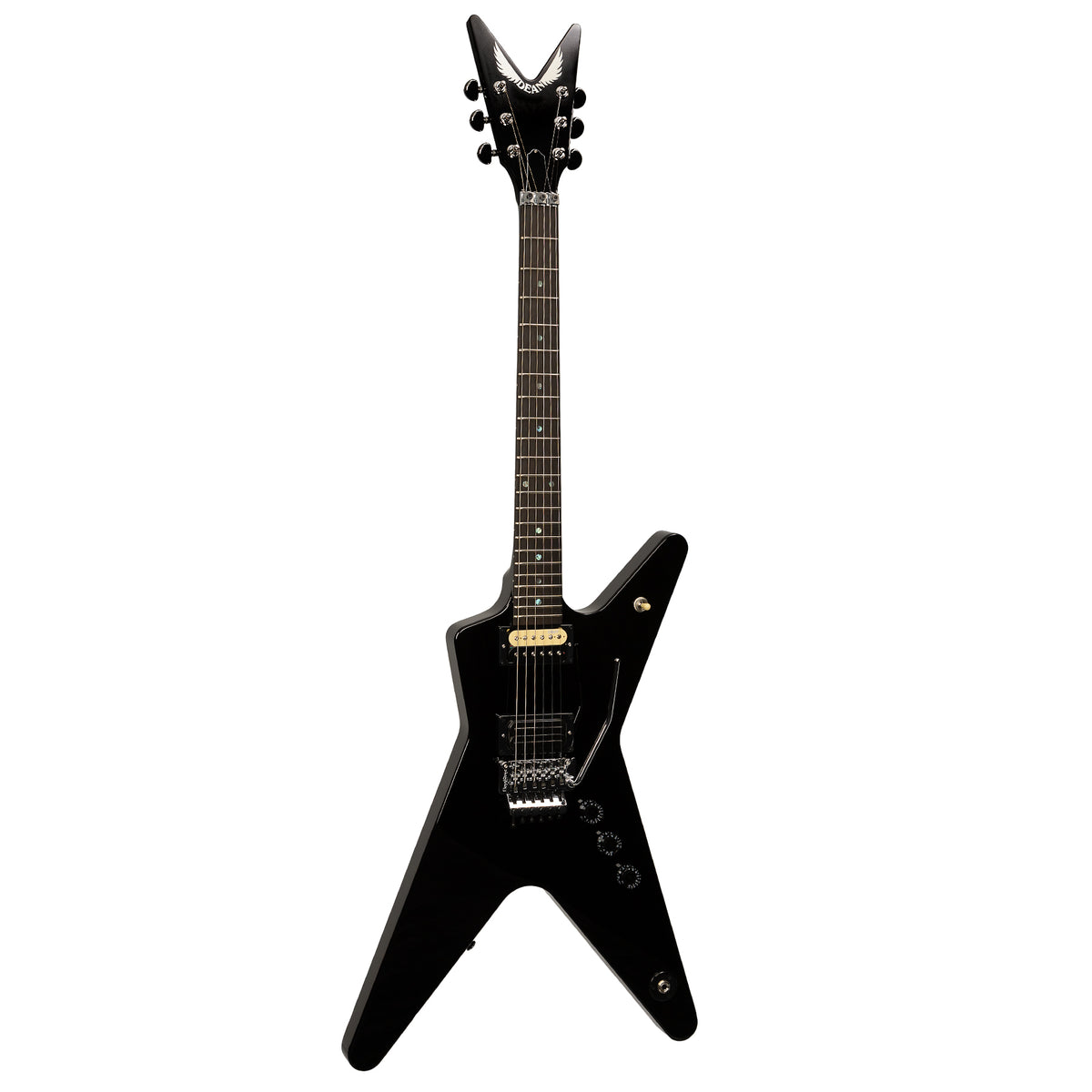
Dean Guitars — daring to be different since 1976
Dean Guitars was founded in 1976, at a time when things were looking bleak for the guitar industry. The two companies largely responsible for the electric guitar craze in the first place, Gibson and Fender, were now owned by large conglomerates. If you were shopping for an electric guitar then, the market was flooded with low-quality instruments, and it seemed like all innovation had dissolved — until Dean Zelinsky came along.
When Zelinsky founded the company in Chicago, the early models made it clear he would be taking classic electric guitar design in a new direction. The ML, Dean V, Dean Cadillac, and Dean Z were all based on body styles you already knew at the time, but with an aggressive look that firmly set them apart. Edgy looks, innovative features, hot new colors, and a bigger, bolder headstock meant you could pick a Dean out across a room, and the pioneers of heavy metal soon took note.
Word spread among musicians, the way it does when you find something good: there was a new small-name manufacturer producing quality USA-made guitars, in a period when you could hardly find them. Slowly but surely, players became aware that Dean was doing something truly different, and doing it well. Dean looked positioned for slow, steady growth.
And then MTV happened.
Dean Guitars timeline — Fast Facts
- 1976: Dean Zelinsky founds Dean Guitars in Chicago
- 1977: The Dean ML is introduced
- 1981: MTV launches; if you had cable, you saw Dean in the videos for Sammy Hagar's "I Can't Drive 55" and ZZ Top's "Legs"
- Late '80s: Dean ceases production and the company is put up for sale
- 1990: Tropical Music, a Miami-based company, buys Dean
- 1994: Dimebag Darrell ends his association with Dean to become a Washburn artist
- November 2004: Dimebag re-signs with Dean, and is killed the following month
- 2017: Elliot Rubinson passes away
- May 2019: Gibson sues Dean over the Z and the V
- August 2021: Dimebag Darrell's estate brings its dispute
- May 2022: A jury finds for Gibson
- Today: 50 years in business, 110 electric guitars in the complete current catalog
I Want My MTV
It's hard to overstate how impactful the launch of MTV in 1981 was for popular music. Before MTV, music videos were somewhat of a novelty. After MTV, if you wanted to reach aspiring rockers, video was the delivery vessel of choice. Artists soon focused on visual appeal as much as the music, which meant a newfound interest in wild-looking instruments, and Dean was uniquely positioned to provide them.
The early MTV vibe was revolutionary, and so was the music of the early '80s. If you were an artist in 1982, why would you want to be seen playing the guitars of yesteryear, now being produced by conglomerates like CBS and the Norlin Corporation? Visual impact was now as important as the music itself, and plenty of players were turning to Dean for a fresh new look. From Cars and Kansas, to Heart and the Doobie Brothers, Dean was quickly becoming a recognized name. Dean's high-profile appearance in the videos for Sammy Hagar's "I Can't Drive 55" and ZZ Top's "Legs" sealed the deal: if you had the TV on, Dean guitars were now as recognizable as the artists themselves.
Just as countless new players rushed to buy an electric guitar after hearing The Beatles on The Ed Sullivan Show, so too would scores of players rush to buy a Dean after seeing one on MTV. And thus began the (first) downfall of Dean.
If MTV made Dean, how did it nearly break them?
Growing too large too quickly is incredibly difficult to manage. Hold on, though: if MTV thrust Dean into the spotlight and basically brought them into the same league as Gibson and Fender, how was that their downfall? It comes down to the same problem any manufacturing-based business faces. It's technically a "good" problem to have, and it's still a problem when demand for your product far exceeds your ability to produce it.
Dean faltered, but not for lack of effort. Zelinsky responded to growing demand by adding new models, ramping up production, spending more on marketing, and otherwise trying to feed the beast that had been created. The reality is that the growth was impossible to manage smoothly: music was evolving, MTV was changing, and Fender and Gibson were again becoming increasingly relevant to new players. By the late '80s, Dean Guitars was in trouble, ultimately ceasing production and putting the company up for sale.
In 1990, Dean was sold to Tropical Music, a Miami-based company that distributed guitar products in the USA and Latin America, and had experience making guitars in Japan and Korea for the western market. There is nothing in that sentence that would have seemed significant to you as an aspiring guitarist at the time. But there was a young player who was quickly becoming very significant and happened to play a Dean: Darrell Abbott, better known to you as Dimebag Darrell from Pantera.
Dimebag formed Pantera in the early '80s with his brother Vinnie Paul on drums, though it wasn't until the late '80s and early '90s that they would gain widespread recognition. By then he had won his iconic Dean ML in a guitar competition, and his rise to fame brought the Dean name along with him. Pantera was kicking the sound of modern metal forward with steel-toed boots, and Dimebag's revolutionary approach to playing his Dean spoke to an entirely new generation of aspiring rockers. Whether he intended to or not, Dimebag basically brought the Dean name back from the dead — but for how long?
Dimebag leaves Dean for Washburn
Dimebag's close association with his Dean ML caused sales to surge in the early '90s, but the company's optimistic outlook was relatively short lived. In 1994 he ended his association with Dean to become a Washburn artist, and that led straight into the next major challenge. With the loss of Dimebag as a Dean artist, and the rising popularity of grunge music (a cultural counterpoint to the glam and heavy metal scene you'd long associated with Dean), the future for Dean once again seemed uncertain. The brand was entering the grunge '90s with an '80s glam style, and that was not going to work.
Elliot Rubinson and the Armadillo era
While the management at Tropical Music was not optimistic about Dean's future, one music store owner held a different perception. Elliot Rubinson, who owned a large chain of music stores, believed Dean's best days were still ahead of them. With visions of a brighter future, he bought Dean Guitars to be part of his company, Armadillo Enterprises, and his passion and commitment to the brand would usher in the second major recovery Dean would experience.
Rubinson was instrumental in bringing Dean back to its founding principles: making exceptional instruments that pushed the art of electric guitar forward. He brought back USA production, setting the foundation for the Dean USA Custom Shop we know today. He upgraded Dean's global supply chain to meet the demand you were creating, and invested more in marketing to create more of it. And he was determined not only to grow the Dean artist roster, but to court Dimebag Darrell back to the re-invented brand.
He succeeded. In November 2004, Dimebag signed with Dean Guitars for his return, with plans to launch his all-new signature model shortly after. Before that could happen, a series of tragedies would once again put the company's future in question.
Losses too great to overcome
Up until this point in the mid-'90s, Dean's setbacks were somewhat typical of any popular brand in a growing market facing growing pain. The next series of struggles hit the Dean family in extremely personal ways. Within one month of re-signing with Dean, Dimebag Darrell was tragically killed along with three others while performing at a club. The senseless act was obviously a tragedy for the Abbott family, and if you were a fan of Dimebag and his music, you felt that loss reverberate far and wide.
The loss hurt Elliot Rubinson personally. If you know anything at all about Dimebag Darrell, you know that everyone who interacted with him simply loved him: he was beloved for his genuine passion and enthusiasm, and his relationship with Elliot and Dean was deep and sincere. In the years following the tragedy, Rubinson would work with Dime's family to bring his signature instruments to market. The collaboration was mutually beneficial for well over a decade, but unfortunately, tragedy would strike again.
In 2017, Elliot Rubinson passed away. His passion for Dean Guitars saved the brand in the '90s, and his death would thrust the Dean family into yet another period of uncertainty, the third in its 50-year history. Rubinson had been the driving force behind the brand, and without him, the Dean family found themselves in a precarious position.
And then, the lawsuits began.
Surviving a battery of legal issues
If you follow the guitar industry at all, what followed Elliot Rubinson's passing was a chain of events that have been the equivalent to tabloid news over the last 5 years. Between a trademark battle with Gibson, a falling out with Dimebag Darrell's estate, and an ugly battle within the ownership group that led to name-calling, lawsuits and claims of a pending financial armageddon, Dean would experience an incredibly tumultuous transition to their modern era.
Gibson takes Dean Guitars to court
In May of 2019, Gibson Guitars filed a lawsuit against Dean Guitars alleging trademark violations and counterfeiting. At issue were the now-iconic Dean Z and V, and their similarity to Gibson's Explorer and Flying V models. Other than the headstock, the similarity was definitely there, and it had been for over 40 years. If you ever played one, you know the shapes: these were core models in Dean's lineup since the beginning, and Gibson had never indicated that they felt they owned them.
Dean fought the case in a jury trial, and in May 2022, Gibson won. But that was not the final word. Dean appealed, arguing in part that the trial court had improperly excluded evidence concerning third-party use of the disputed guitar shapes.
On July 8, 2024, the U.S. Court of Appeals for the Fifth Circuit reversed the relevant judgment and sent the case back for a new trial. In other words, the original jury verdict was not the final resolution of the dispute. The appellate ruling did not simply declare Dean the winner; instead, it reopened the case for further proceedings.
Before that ruling, President Patrick Schuleit explained why Dean had appealed:
“We respect the decision of the trial jury and the judge. However, we feel like there was some other case law that wasn't cited that we weren't allowed to use, and that gave us grounds to do an appeal — so we're actually waiting any day now to see what the appeal will yield in terms of a decision. And whatever comes out of that, we will respect it and move forward.” — Patrick Schuleit, President of Dean Guitars
According to the Dean team, they have moved on and do not feel that winning the rights to return these guitars to production is critical. They have replaced them with more aggressive and sharper versions called the Zero and Vengeance. In the words of Dean Guitars President and CEO Pam Rubinson:
“Gibson can go fight with somebody else — we've re-designed our line, and it's flourishing!”
The Dimebag estate suit
While Dean was ready to move on from the battles with Gibson, more legal disputes were on the horizon. In August of 2021, Dean received bad news from Dimebag Darrell's estate. That dispute has since advanced significantly. In 2026, a federal court ruled in Dean's favor on the majority of the estate's claims, including trademark, trade-dress, fraud, and breach-of-contract claims. Two issues remained unresolved, and the estate has said it intends to appeal. and some issues remain unresolved. The dispute is related to claims of a failure to pay royalties, and the rights to various trademarks. To go beyond the tabloid headlines, we asked CEO Pam Rubinson and President Patrick Schuleit about it directly:
“I was not here when the dispute started, so I can't really speak to what happened in the moment. I was very saddened to know that this dispute was going on, even though it was a very short time that Elliot worked with Dime. It was a very meaningful time for both of them… I personally reached out to Rita and asked her if we could work together, since both of our deceased spouses wanted this contract. 'Could we go back to the original contract and could we make it work?' I can't speak to a lot of the details because there's ongoing litigation, but I think that… Rita felt that she had better options other places, and I wish her the best.” — Pam Rubinson, CEO of Dean Guitars
“They have a very strong opinion on their side, and we have a very strong opinion on our side. And we're very comfortable with our lawyers handling this. I think they feel the same way. When you have a situation like this, that's, I believe, exactly what the courts are designed for. You have two parties that can't agree on something, and so we're going to put our faith in our lawyers. They're doing the same, and we'll get a resolution in that regards. But I can assure you that none of the folks on the Dean side were interested in having this turn into a litigation.” — Patrick Schuleit, President of Dean Guitars
Ownership conflicts test Dean once again
Following the legal conflicts with Gibson and the Dimebag estate, you might think things would begin to settle down. Another major issue was making itself apparent, and it would truly test the Dean family. A dispute between members of the ownership group of Dean's parent company involved much mudslinging, as well as additional legal matters.
Is Dean Guitars still in business?
Dean says yes, on the record, and their answer is that you should follow what the company is actually doing rather than what you read about it. More recently, claims arose that the company was not financially stable. Specifically, it was blankly stated that the company would not survive. We asked Dean directly about the latest controversies surrounding the brand, and here's what they said:
“The first thing I would say to everyone, whether it applies to us or anyone else, is believe half of what you read. Difficulties, salaciousness, problems, that's what sells news. And that's what people publish for that reason. If you really want to know what's going on, you follow what's happening with the company. I read one article that said that we owed our lenders $40 million. That's preposterous. It's not even in the realm of reality. This company, once again, we are built on a very strong foundation and that foundation was put in place by Elliot. And everyone here remembers him, and to a certain degree reveres him. And our goal and our work ethic is such that we're not going anywhere. We are solid. We hope to get better. We want to compete in the marketplace at the highest levels. And we are now — and we will going forward.” — Pam Rubinson, CEO of Dean Guitars
“In terms of the future for the Dean brand, we have an unbelievably strong start to 2024. We had a double-digit growth business plan and we've had to increase that based on the response from our new guitars at NAMM. So we're very excited about the future. We've got some great marketing initiatives — I wouldn't bet against us.” — Patrick Schuleit, President of Dean Guitars
Dean Guitars today — evolving with modern players
And thus we enter the modern era of Dean Guitars. We'd compare the brand to the ancient myth of the Phoenix rising from its own ashes, but as far as we know, a Phoenix would only do this once. Dean Guitars has survived three near-death experiences in its 50-year history. and their outlook now is as optimistic as ever. Asked where the brand stands today, the team put it plainly:
“We feel that Dean is one of the most iconic brands in the genre of heavy metal music, and our goal is to kind of get us back to the level that we've enjoyed for a number of years, which is being the go-to brand for heavy metal guitarists.”
“The Dean Guitars brand today has come a long way. You might remember it from back in the day of ZZ Top Fuzzy Guitars and the Cars and Sammy Hagar with the Baby ML… they're really flamboyant, kind of out there. Where we're at today is we've stepped beyond that. We do guitars that are for everybody. If you're a bedroom shredder, if you're a YouTube influencer, multi-scale guitars, Kahler guitars, exotic woods… our USA shop can pretty much do anything that we put our mind to.” — Eric Stewart, VP of Product for Dean Guitars
“We're rebellious — we're supposed to be the rebellious brand. We're just being ourselves and trying to think about the players first.”
The new face of classic Dean Guitars
The modern Dean lineup runs to 110 electric guitars across an impressive range of body shapes, so you have a far wider range to pick from than the brand's initial heavy metal-focused designs offered. Three models in particular exemplify the modern brand, and no conversation about Dean is complete without a fourth.
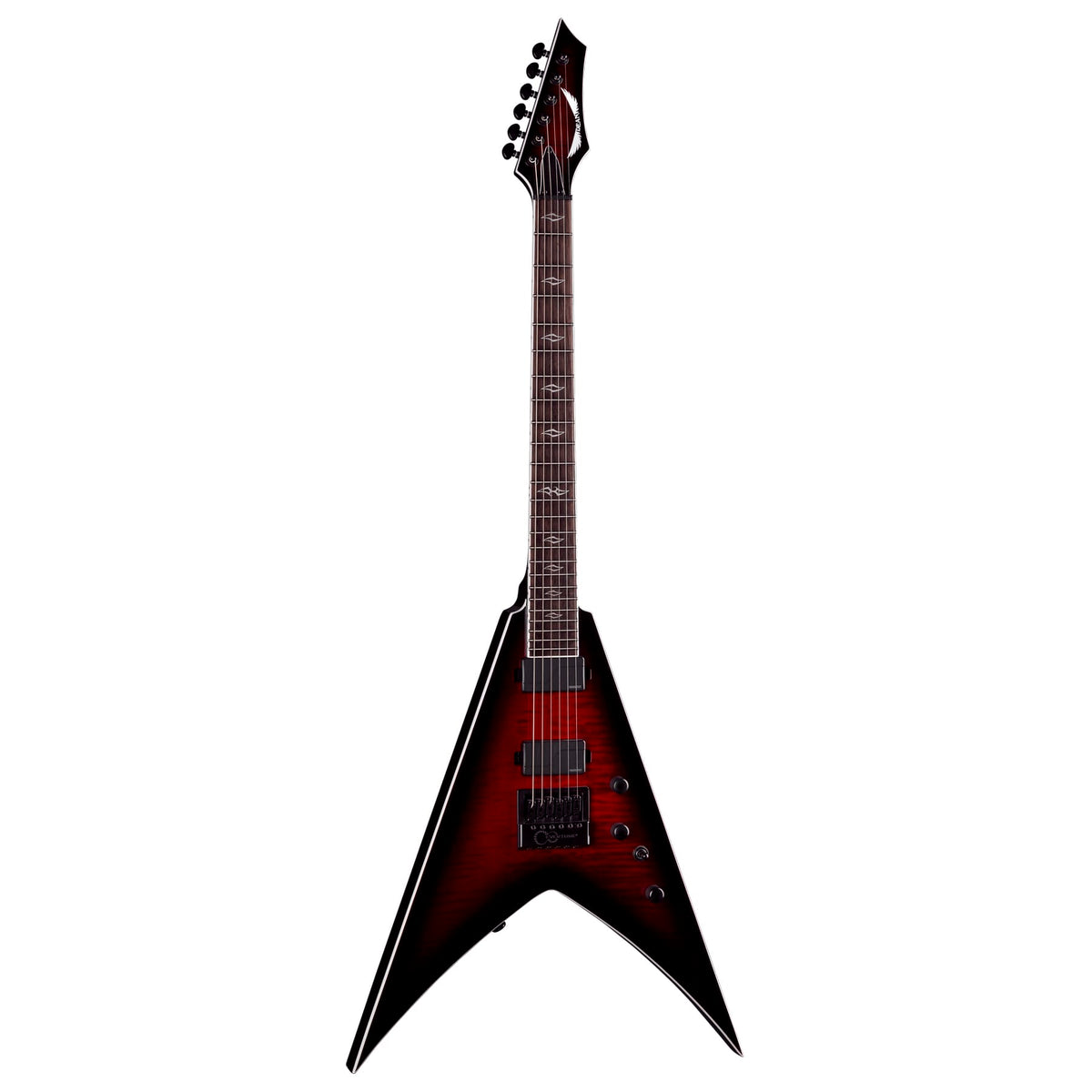
- Vengeance: Replaces the V, with a re-designed shape that maintains the essential character of the guitar it's inspired by.
- Zero: Replaces the Z, under the same brief.
- Exile: Dean's entry into the crowded "Super Strat" market, which should be comfortable for a brand with rock and metal heritage, but is new territory for them nonetheless.
- ML: First introduced in 1977, a best-seller for the brand ever since the early '90s, and still one of the biggest families in the lineup
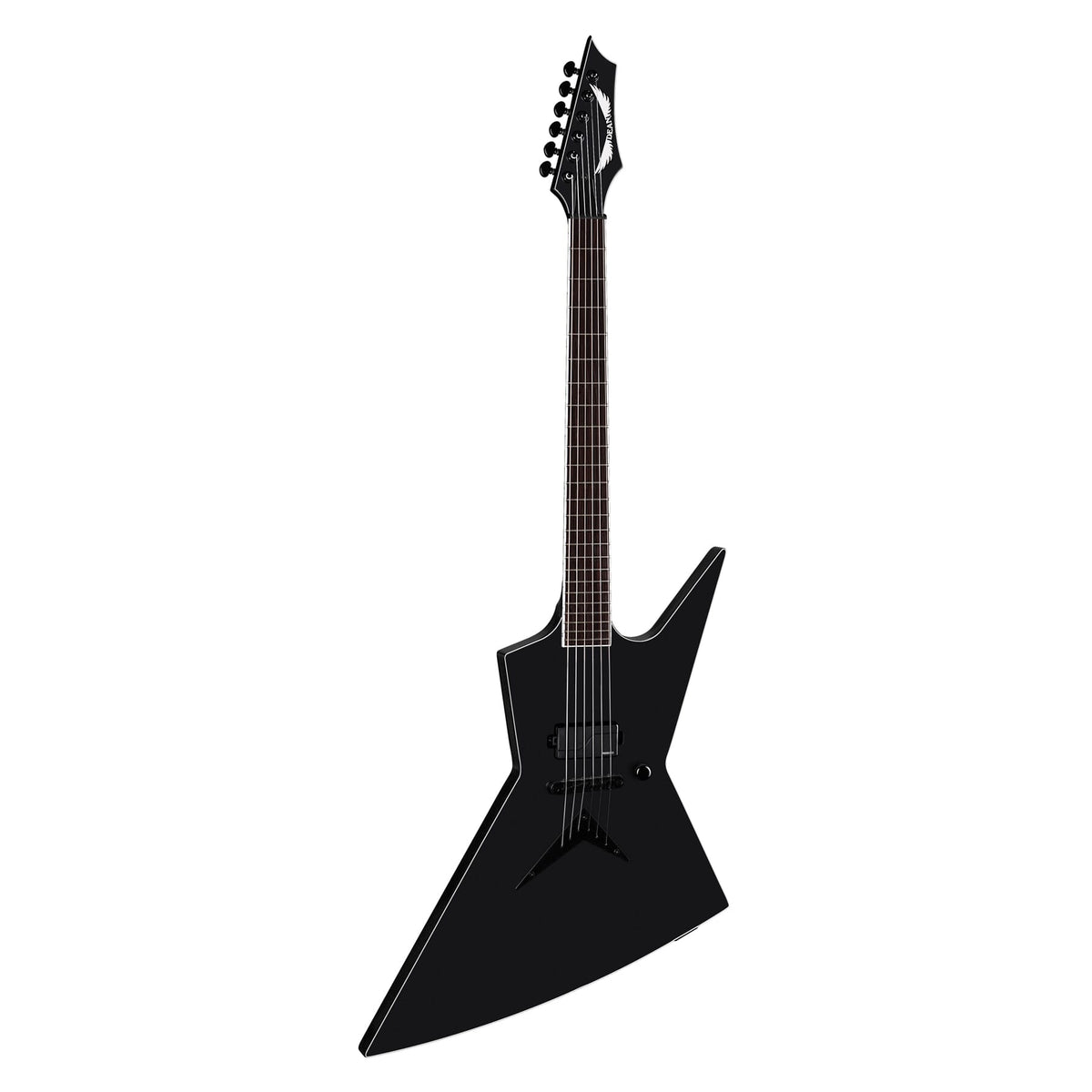
The V and Z were removed from the lineup following the Gibson lawsuit, and the Vengeance and Zero are their more aggressive, sharper replacements. As for the ML, it played a huge role in Dean's growing reputation for innovative guitar designs: compared to anything else you could buy at the time, it showed you that Dean was decidedly different right from the start.
Dean Guitars: always artist driven
From the early days of MTV, Dean Guitars has been driven by artists. If you grew up in the '80s, the image of ZZ Top playing fuzzy pink Dean guitars is probably burned into your brain. And while music has grown and evolved since then, Dean has stayed true to their roots by focusing on hard-rocking performance tools for demanding musicians.
You need only look at the modern Dean artist roster to see that modern metal and hardcore is infused with Dean. Kerry King brings his legacy as a founder of thrash-metal band Slayer to the forefront with his iconic signature models. The Kerry King V and Kerry King Overlord feature a unique take on the classic V-shape body, and were designed with King's decades of experience in thrash guitar.
Michael Amott, ranked as one of the 100 Greatest Heavy Metal Guitarists of All Time by Guitar World, has also joined with Dean to create his signature model. As a songwriter and founding member of Arch Enemy, Spiritual Beggars, and Carnage, Amott has pushed the sound of modern metal forward in influential ways. The Michael Amott Series combines striking visuals with eminent playability, while maintaining a bit of the classic Dean vibe.
Beyond iconic guitarists like Dimebag Darrell, Kerry King, and Michael Amott, plenty of modern talent is choosing Dean as their guitar of choice. If you have caught Greg Tribbett (Mudvayne), Wayne Lozinac (Hatebreed), Connor "Grod" Grodzicki (Vended), or Hog and Sun (Swollen Teeth) lately, you have seen the proof: Dean is ready to continue meeting the needs of the hardest-performing guitarists on the scene.
Dean Guitars FAQ: Common Questions
Why did Gibson sue Dean Guitars?
Gibson filed suit in May 2019, alleging trademark violations and counterfeiting. At issue were the Dean Z and V and their similarity to Gibson's Explorer and Flying V. A jury found for Gibson in May 2022, but Dean appealed. On July 8, 2024, the Fifth Circuit reversed the relevant judgment and sent the case back for a new trial. The ruling did not simply declare Dean the winner; instead, it reopened the case for further proceedings.
Can you still buy a Dean Z or a Dean V?
The original Dean Z and Dean V are no longer part of Dean's current regular catalog. Dean replaced them with the Zero and Vengeance, which remain part of the current lineup.
What happened between Dean Guitars and Dimebag Darrell?
In 2026, a federal court ruled in Dean's favor on the majority of the estate's claims. Two issues remained unresolved, and the estate has said it intends to appeal.
Who runs Dean Guitars now?
Pam Rubinson is CEO, Patrick Schuleit is President, and Eric Stewart is VP of Product. They are the three voices you hear on the record in this article.
What is the Dean ML?
The ML is the body shape that built Dean's reputation for radical design. It was first introduced in 1977, it is the guitar Dimebag Darrell won in a competition and played, and it has been a best-seller for the brand ever since the early '90s. It is still the largest family in the catalog, with 29 models.
How long has Dean Guitars been in business?
50 years, founded in Chicago in 1976 by Dean Zelinsky.
Is Dean Guitars going out of business?
Dean's CEO says no, directly and on the record, calling the reported $40 million lender figure "preposterous" and "not even in the realm of reality." Her advice to anyone weighing the rumours is to follow what the company is actually doing rather than what gets published about it.
Dean Guitars — now you know
There you have it: the sequence of rises, falls, and recoveries of one of the hardest-rocking guitar manufacturers around. Whether you came for the Gibson verdict, the Dimebag chapter, or you just wanted to know whether Dean is still standing, that's the Dean Guitars story. We're happy the brand is still alive and well after they've been through so much, and that their future looks bright.
- Introduction
- Quick Take
- Dean Guitars — daring to be different since 1976
- Dean Guitars timeline — Fast Facts
- I Want My MTV
- If MTV made Dean, how did it nearly break them?
- Dimebag leaves Dean for Washburn
- Elliot Rubinson and the Armadillo era
- Losses too great to overcome
- Surviving a battery of legal issues
- Gibson takes Dean Guitars to court
- The Dimebag estate suit
- Ownership conflicts test Dean once again
- Is Dean Guitars still in business?
- Dean Guitars today — evolving with modern players
- The new face of classic Dean Guitars
- Dean Guitars: always artist driven
- Dean Guitars FAQ: Common Questions
- Why did Gibson sue Dean Guitars?
- Can you still buy a Dean Z or a Dean V?
- What happened between Dean Guitars and Dimebag Darrell?
- Who runs Dean Guitars now?
- What is the Dean ML?
- How long has Dean Guitars been in business?
- Is Dean Guitars going out of business?
- Dean Guitars — now you know


